Skip to content

CushionFactoryUSA · Custom cushions for the way you live

Custom Cushion Experts
Any Size
Any Color
Any Shape
CushionFactoryUSA
CushionFactoryUSA · Custom cushions for the way you live

How to Measure Your Cushions

Home >> How to Measure Your Cushions

Custom cushions only work if the measurements are right. This guide walks you through measuring every shape we make, from a simple rectangle to a fully custom template.

Rectangle & Square Round Trapezium T-Shape L-Shape Equilateral Triangle 90° Triangle Throw Pillows Chaise Lounge Custom Shapes

Before You Start

  • Measure the furniture, not the old cushion. Cushions that are sagging or misshapen won't give you an accurate measurement.
  • Measure edge to edge across the area where the cushion will sit.
  • Pick your thickness. Seat cushions and pads come in 2 to 12 inches, in 1-inch increments. Choose based on comfort and how the cushion will be used.
  • Write every measurement down in inches as you go, and label which side is which.
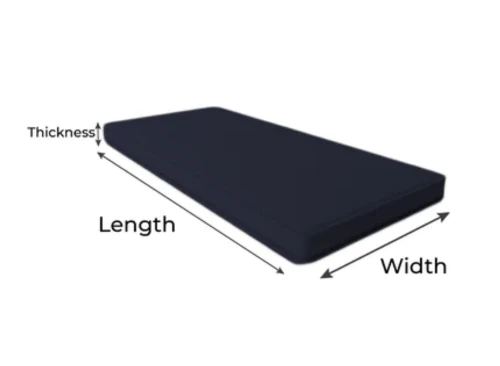
Diagram showing length and width measurements on a rectangle cushion

Rectangle & Square Cushions

  1. Measure the length and width of the area where the cushion will sit, edge to edge.
  2. Choose your thickness (2–12 inches, in 1-inch increments) based on comfort and intended use.

Note: Don't measure a cushion that's sagging or misshapen; it won't give you an accurate size.
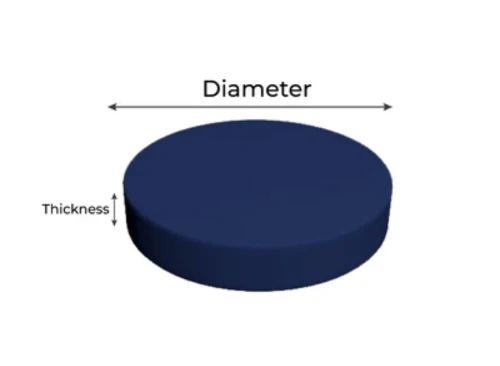
Diagram showing the diameter measurement across a round cushion

Round / Circle Cushions

  1. Measure the diameter from one edge to the other, passing through the center point.
  2. Choose your thickness (2–12 inches, in 1-inch increments).
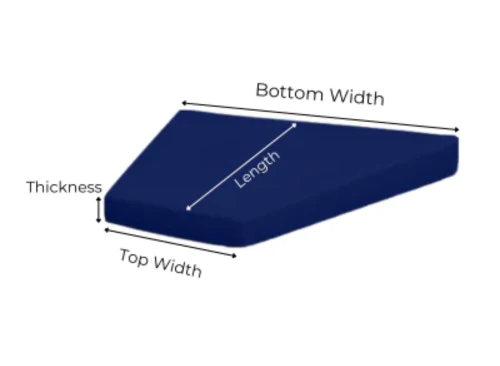
Diagram showing length, top width and bottom width on a trapezium cushion

Trapezium Cushions

  1. Measure the length from the middle, perpendicular to the top and bottom edges.
  2. Measure the bottom width from the widest edge, then the top width across the opposite side.
  3. Measure the thickness, based on your old cushions or the comfort level you want.
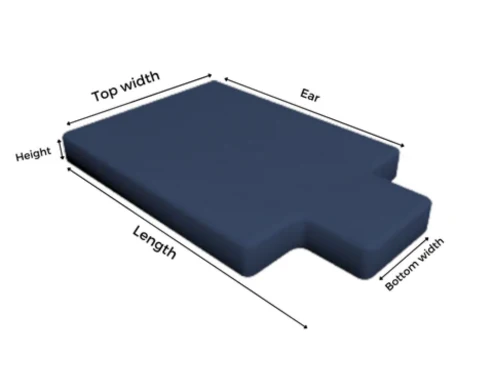
Diagram showing length, widths and ear extension on a T-shape cushion

T-Shape Cushions

  1. Measure the length from the middle, perpendicular to the top and bottom edges.
  2. Measure the top width from the widest edge, then the bottom width across the opposite side.
  3. Measure the thickness, based on your current cushions or the comfort level you want.
  4. Record the "ear" or extension, measuring from the top edge.
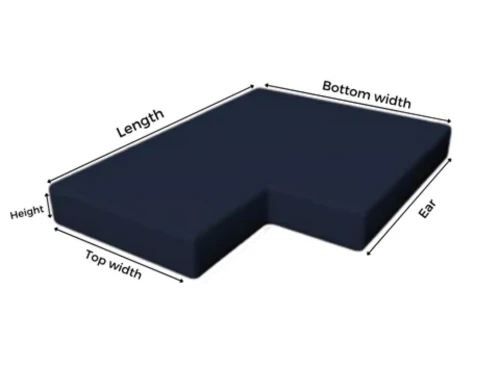
Diagram showing length, widths and ear extension on an L-shape cushion

L-Shape Cushions

  1. Measure the longest side of the cushion as the length.
  2. Measure the bottom width from the widest edge, then the top width from the opposite side.
  3. Choose your thickness, based on your old cushions or the comfort level you want.
  4. Record the "ear" or extension, measuring from the bottom edge next to the bottom width.
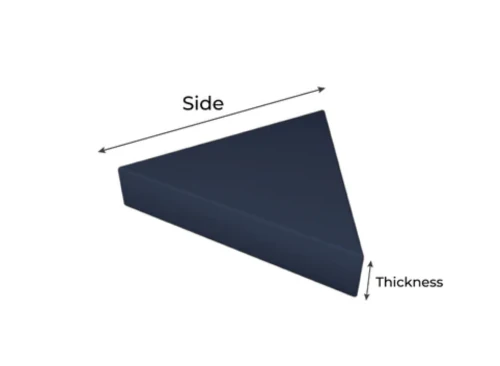
Diagram showing the side measurement on an equilateral triangle cushion

Equilateral Triangle Cushions

  1. All three sides are equal, so measure the length of any one side.
  2. Choose your thickness, based on your old cushions or the comfort level you want.
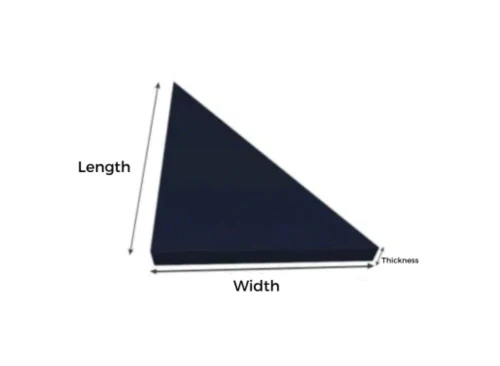
Diagram showing the two perpendicular sides on a 90 degree triangle cushion

90° Triangle Cushions

  1. Find the two perpendicular sides. Measure one as the length and the other as the width.
  2. Choose your thickness, based on your old cushions or the comfort level you want.
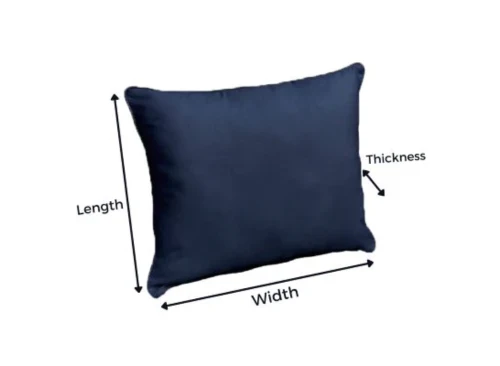
Diagram showing how to measure a throw pillow top to bottom and left to right

Throw Pillows

  1. Hold the top and bottom corners and gently pull the fabric tight.
  2. Measure from top to bottom along the edge of the pillow.
  3. Hold the left and right corners, pulling the fabric tight.
  4. Measure from left to right along the edge of the pillow.
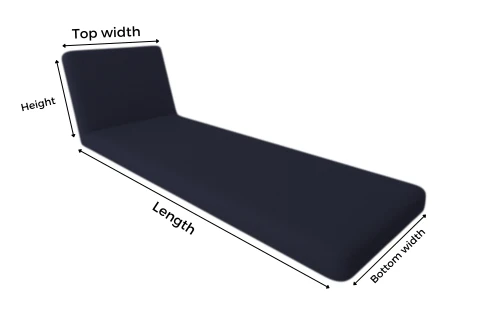
Diagram showing length, height, top width and bottom width on a chaise lounge cushion

Chaise Lounge Cushions

  1. Measure the length, bottom width, height and top width of the chaise, edge to edge.
  2. Choose your thickness (2–12 inches, in 1-inch increments), depending on the cushion or pad you select.

Note: Don't measure a cushion that's sagging or misshapen; it won't give you an accurate size.
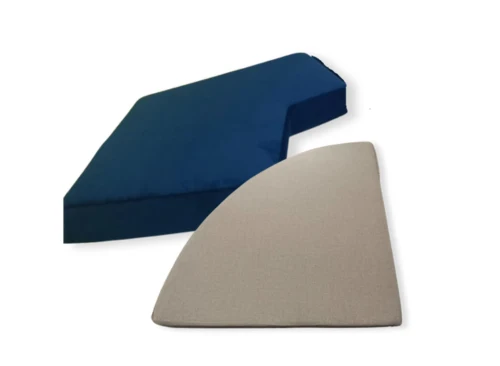
Tracing paper template being made for a custom shape cushion

Custom Shapes

If your cushion isn't one of the shapes above, make a paper template. Stuck? Our customer support team can walk you through it.

  1. Use tracing paper or chart paper large enough to cover the cushion area. If the area is too big for one sheet, tape several together into a single piece.
  2. Carefully trace along the edges of the area, using a ruler or freehand.
  3. Label each side with its measurement.

Comfort, Customized for You

Ordering cushions with CushionFactoryUSA is straightforward. This short video walks you through building a cushion that fits your needs.

Why Order With Us
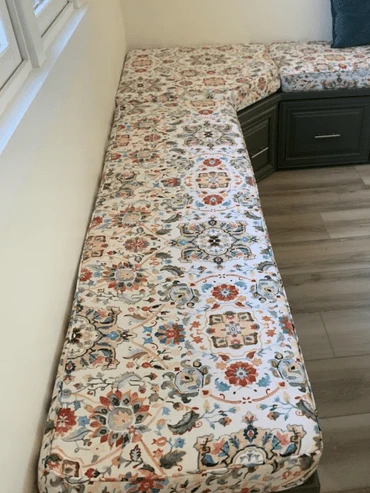
Custom shape cushion made to a customer template

Custom shapes

Choose from our pre-defined shapes, or send us your own. If you have a shape that isn't listed, message us and we'll help you create it.
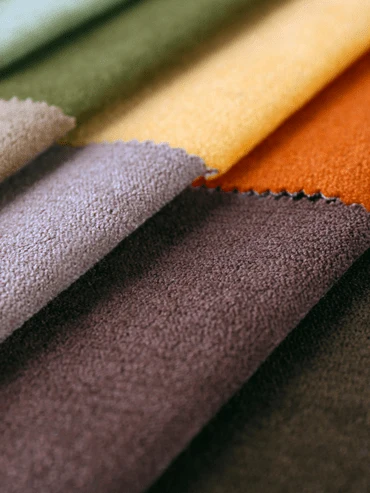
Stack of cushion fabric swatches in different colours and textures

A fabric range to match any room

Indoors, outdoors, boats or vans, there's something here for every setting. We carry velvets, faux leather, faux linen, satins, acrylics and more.

Custom cushions with piping and tie detailing

Unique requests

We offer personalization such as ties and piping, and every cushion comes with a zipper opening so it's easy to remove the cover. Need Velcro snaps or branding? Talk to us and we'll make it happen.

Ready to Order?

Measurements in hand? Pick your shape, fabric and foam, and we'll build it to size.

Still deciding on materials? See our Foam Guide and Materials pages, or call +1 720-627-7225.

Frequently Asked Questions

How do I measure? +

Measuring for a CushionFactoryUSA order depends on the shape: rectangles need length and width edge to edge, rounds need diameter through the center, and L-shapes or T-shapes need both widths plus the “ear” extension. CushionFactoryUSA recommends measuring the seating surface itself, not an old cushion, since sagging distorts the size.

What measurements do I choose? +

For a CushionFactoryUSA order you choose length, width (or diameter for round shapes) and foam thickness, which ranges from 2 to 12 inches in 1-inch increments. Shape-specific cushions like L-shapes, T-shapes and trapezoids also need extra dimensions such as the “ear” extension or top and bottom widths.

How thick should a cushion be for a bench? +

CushionFactoryUSA generally recommends 2 to 3 inches of foam for a dining-style bench cushion and 4 to 5 inches for a lounging bench, with thickness selectable from 2 to 12 inches. Choose thicker foam for softer comfort and thinner foam for a firmer, more tailored seat.

What is the best thickness for seat cushion? +

CushionFactoryUSA offers foam thickness from 2 to 12 inches for seat cushions, and generally recommends thicker foam, around 4 to 5 inches, for lounging comfort and thinner foam, around 2 to 3 inches, for dining or task seating.

What is the best thickness for outdoor cushions? +

CushionFactoryUSA recommends at least 5 to 7 inches of foam thickness for the best comfort on outdoor cushions, with options selectable from 2 to 12 inches. Pair that thickness with Dry Fast foam for damp climates to combine comfort with moisture resistance.

How to measure for outdoor cushions? +

CushionFactoryUSA recommend measuring outdoor cushions by taking the seating area's length and width edge to edge, using the actual chair or bench frame rather than an old, sagging cushion as a guide. Its measuring guide gives shape-specific steps for rectangle, round, trapezoid, T-shape, L-shape and triangle cushions.

How to measure couch cushions? +

CushionFactoryUSA recommends measuring couch cushions edge to edge across the seating area's length and width, using the frame itself rather than an old, sagging cushion. Its measuring guide breaks this down by shape -- rectangle, round, T-shape, L-shape, trapezoid and triangle -- since each shape needs different reference points.

How to measure a papasan chair for a cushion? +

Measure a papasan chair cushion the way CushionFactoryUSA measures a round cushion: find the diameter across the center point of the bowl, from one edge to the opposite edge. For an uneven or oval bowl, trace the shape onto paper using CushionFactoryUSA' custom-template method instead of relying on a single diameter number.

What size cushion for adirondack chair? +

CushionFactoryUSA doesn't publish a standard Adirondack chair cushion size, since it makes every cushion to the customer's own measurement. Measure the chair's seat length and width edge to edge, plus the back if you want a matching back cushion, using our rectangle or curved-shape measuring steps.

How to measure for replacement outdoor cushions? +

Measure a replacement outdoor cushion the same way as any custom cushion: measure the seating area's length and width edge to edge using CushionFactoryUSA' shape-specific guide, rather than an old, sun-faded or sagging cushion, since years outdoors can distort its true size.

What are the standard sizes of cushions? +

CushionFactoryUSA doesn't sell standard preset cushion sizes — every cushion is made to the customer's own measurements. The one standardized element is foam thickness, offered in 2 to 12 inch increments depending on how firm or plush you want the cushion.

How thick should foam be for a couch cushion? +

CushionFactoryUSA makes cushion foam in 2 to 12 inch thickness increments, so the right thickness depends on how firm or plush you want the seat — thinner foam gives a leaner profile, while thicker foam adds more cushioning and support for daily seating. Match it to your existing cushion's depth if you're replacing one.

How thick should an outdoor bench cushion be? +

CushionFactoryUSA makes outdoor bench cushion foam in 2 to 12 inch thickness increments — thicker foam holds up better to daily outdoor seating and drains faster if it's Dry Fast foam, while thinner foam suits a lower-profile look. Match the thickness to your bench's existing cushion if replacing one.

What is the best thickness for window seat cushions? +

CushionFactoryUSA makes window seat cushion foam in 2 to 12 inch thickness increments — a thinner cushion (2–4 inches) keeps a low profile under a windowsill, while a thicker one adds more seating comfort for daily use. Match the thickness to your window seat's depth and how the space is used.

How thick should foam be for a bench cushion? +

CushionFactoryUSA makes bench cushion foam in 2 to 12 inch thickness increments — thicker foam gives firmer, longer-lasting support for daily seating, while thinner foam suits a lower-profile bench. Match the new foam's thickness to your existing cushion if you're replacing one.

Are patio furniture cushions standard size? +

CushionFactoryUSA makes patio furniture cushions custom to any size and shape instead of stocking fixed sizes, because most patio cushions are not one standard size — dimensions vary widely by furniture brand and model. Seat thickness is available from 2 to 12 inches, cut to the customer's exact measurements.

Where can I order replacement cushions and weatherproof covers for wicker patio sofas, and how do I measure sizes? +

Discover fabrics selected for your custom cushions and the way you use them. Our outdoor collection includes weather-ready olefin, water-repellent yarn-dyed fabrics and textured outdoor jacquards. For interiors, explore linen and linen-look weaves, soft chenille, velvet, boucle and pet-friendly upholstery options. Choose a color and texture you love, then check the fabric’s recommended use and care details to find the right fit for your space.

What outdoor cushion sizes are available? +

CushionFactoryUSA doesn't limit outdoor cushions to fixed sizes — every cushion is made custom to the buyer's own measurements, with seat and back thickness available from 2 to 12 inches in 1-inch increments, in shapes including rectangle, round, L-shape, T-shape, trapezium, triangle and chaise lounge.

How do I find replacement cushions for outdoor lounge chairs using exact dimensions and color matching? +

CushionFactoryUSA builds replacement lounge chair cushions from the buyer's exact measurements — length, width and thickness — taken from the chair itself rather than an old, sagging cushion. For color matching, CushionFactoryUSA recommends ordering a fabric swatch first, since screen colors can look different from the actual fabric in person.

Show More